

Geometric Patterns from Vibrating Sound
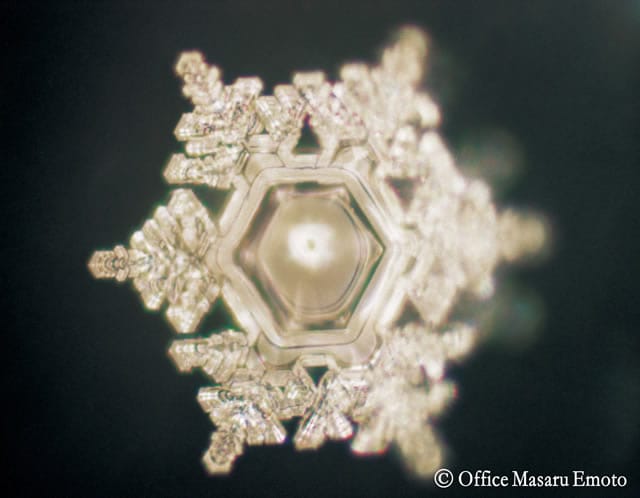
A wooden clapper rotates, creating friction along the rim of a bell. This motion produces distinct rotating geometric patterns—typically a hexagon—that bear a striking resemblance to the forms documented in Masaru Emoto’s water experiments. In those well-known studies, water was exposed to specific words (for example, “love” and “gratitude”) in order to reveal its subtle responses.
Purification Through the Dance of Water and Sound
The interplay between water and Tibetan singing bowls generates moments of subtle yet profound purification. Traditional accounts frequently reference the curative power of water, underscoring its longstanding role in healing practices.
Healing in Ancient Texts
According to the Gospel of John, an angel in Jerusalem near Bethesda would descend into a pool at precise moments, agitating the water so that those who entered first were healed of any disease affecting them.
Mythological Origins and the Vitality of Water
In the Babylonian version of Genesis, Apsu (freshwater) and Tiamat (saltwater) are recounted as the first living entities, whose union gave rise to existence.
The continual interplay between saltwater and freshwater is fundamental to life on Earth—it generates life, shapes coherent forms, produces sound, and drives transformation in both the water and the planet’s other inhabitants.
The naturally dynamic energy found near waterfalls has long been esteemed as beneficial for inner evolution, and this same force is harnessed industrially for the production of electrical energy. The discussion, however, returns to the fascinating dance of water with Tibetan singing bowls.
Investigating Singing Bowls Through Quantum Mechanics
Tibetan singing bowls have also drawn the attention of quantum mechanics.
In 2011, a comprehensive experimental study was conducted by Denis Terwagne of the University of Liège and John W.M. Bush of the MIT Mathematics Department.
Their investigation employed precise and sophisticated instruments to evaluate a variety of bowls—each of varying dimensions—subjected to different forcing frequencies and acoustic excitations. As the force applied to a bowl’s rim increased, the waves forming on the surface of a liquid were observed to evolve into progressively more complex structures.
Dual Behavior at the Micro Scale
A particularly notable finding from the study was that the droplets generated, known as “walkers,” exhibit a dual behavior characteristic of both particles and waves. This corpuscular–wave duality mirrors the phenomena observed at the submicroscopic level as described by quantum mechanics. When water molecules vibrate in unison and achieve a certain degree of coherence, they appear to adopt properties—such as nonlocality—typically associated with quantum systems.
Accelerators of Awareness
This phenomenon may help explain why Tibetan singing bowls are often associated with perceptions of events that seem to transcend conventional spatial and temporal boundaries. In current research, these instruments are regarded as accelerators of awareness, contributing to studies of the intricate interplay between sound, water, and consciousness.
Contributions to the Field
In 2017, a book titled The Dance of Water and Tibetan Singing Bowls was published, thereby contributing to this area of study. In the book’s presentation, a quote from Professor Vittorio Elia—an Electrochemistry lecturer at the University of Federico II in Naples—emphasized that “studying water means immersing oneself in an unknown world.” In a related view, Carl Gustav Jung stated that “water is the most common symbol of the unconscious… psychologically, water signifies spirit turned unconscious.”
The Essential Nature of Water within the Human Body
It is noteworthy that approximately 99% of the molecules composing the human body are water molecules, emphasizing that life is essentially water in motion. Scientific research confirms that water transmits vibrational information throughout the body’s structure.
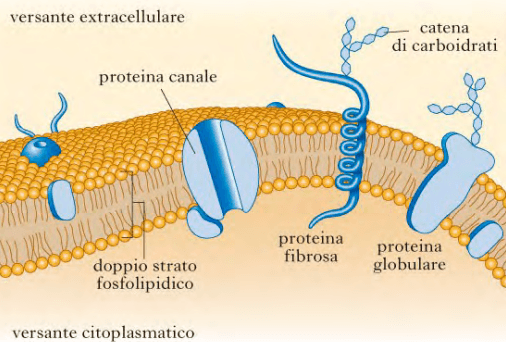
The late Neapolitan physicist Emilio Del Giudice famously described water as the conductor orchestrating molecular exchanges. In biological systems, cell membrane proteins function similarly to receptive antennas that decode energetic fields such as light, sound, and radio frequencies. Much like tuning forks, these receptors respond to environmental vibrations by influencing the protein’s electric charge. In this way, membrane proteins serve as the sensory organs of the cell—analogous to eyes, ears, nose, and taste buds—facilitating communication across biological structures.
Transduction and Cellular Communication
The critical role of these proteins has spurred a dedicated field of scientific inquiry known as “transduction.” In cellular biology, transduction is defined as the process by which a cell converts an external stimulus into a specific internal response.
Tibetan Singing Bowls and Cellular Care
Internationally recognized biologist and immunologist Sondra Barrett has explored the concept of cellular memory and the possibility of diminishing the impact of negative memories. Barrett conceptualizes memories as oleographic waves spreading throughout the body and poses the question of whether a new series of waves might be generated to wash away or reduce the influence of an old, unwanted pattern.
Although her work does not provide a definitive solution, her investigations employ a Tibetan singing bowl as a tool to introduce new energetic waves intended to supplant those associated with painful memories. In her perspective, sound is fundamentally composed of waves of electromagnetic energy, and by actively working with these new waves, an internal change is observed as the old, undesirable vibrational patterns gradually fade away.